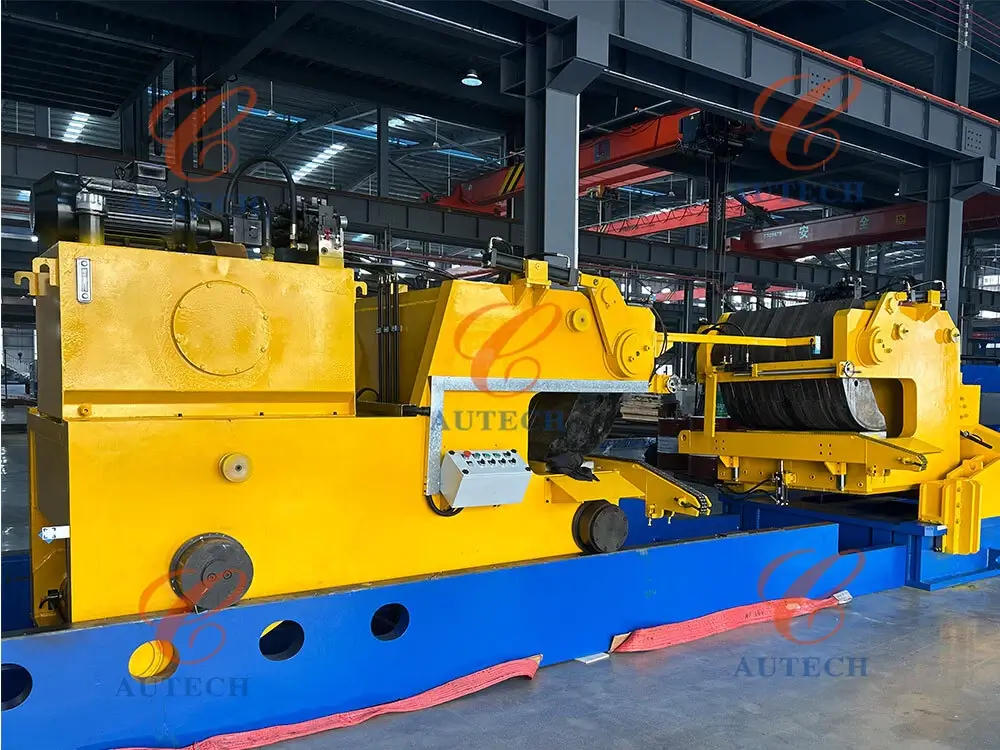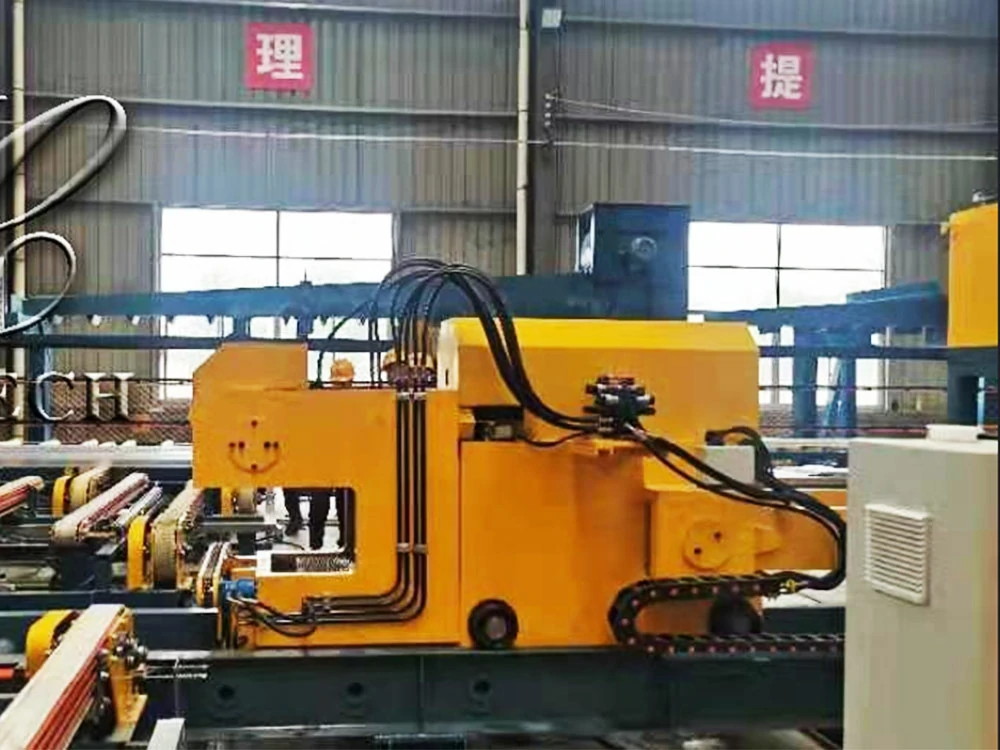
In the aluminum extrusion process, Aluminum Profile Straightening Machines (commonly called Stretchers) are the critical “finishing” equipment located after the cooling bed. Because aluminum profiles are extruded at high temperatures and then cooled, they naturally develop internal stresses that cause them to twist, bow, or “snake” on the run-out table. The stretcher uses mechanical force to pull the profile beyond its yield point, permanently straightening it and stabilizing its dimensions.
1. Core Functions
The stretcher is responsible for the final structural integrity of the profile:
Linear Straightening: It pulls the profile from both ends to remove longitudinal bows or “waves” caused by uneven cooling or extrusion speed.
Twist Removal: By applying controlled tension, it untwists profiles that have rotated during the extrusion or quenching process.
Stress Relieving: It “sets” the internal grain structure of the aluminum, which prevents the profile from warping later when it is cut or machined.
Dimensional Sizing: Stretching slightly reduces the cross-section of the profile, bringing it to its final, precise engineering tolerances.
2. Mainstream Models
Straightening machines are categorized by their automation level and the amount of “pulling force” they can generate (measured in Tons). A. Manual / Semi-Automatic Stretchers A worker manually places the profile into the “headstock” and “tailstock” grips.
Best for: Small-scale plants or very short, custom production runs.
B. Fully Automatic PLC-Controlled Stretchers (Mainstream) The profile is automatically fed into the jaws by the cooling bed’s transfer system. Sensors detect the profile length and adjust the tailstock position automatically.
Best for: 10-inch industrial lines where labor costs and cycle times must be minimized.
C. Multi-Strand Stretchers Equipped with wider “jaws” that can grab and stretch multiple profiles (3 to 5 at a time) in a single cycle.
Best for: High-volume architectural profiles (like window frames).
3.Advantages and Disadvantages
4.Key Considerations for 10-inch Export Projects
As a director managing international trade for heavy equipment, here is what you should emphasize for large-scale clients:
Tonnage Requirement: For a 10-inch line (2500T–3600T press), you typically need a stretcher with a pulling capacity of 60 to 100 Tons. Smaller stretchers will fail to straighten the thick walls of industrial-grade 10-inch profiles.
Grip Design: High-strength alloys (7075 or 2024) used in aerospace or automotive sectors require specialized “non-slip” serrated jaws. If the jaws slip, it can cause a “snap-back” which is a major safety hazard and can damage the machine.
Yield Point Protection: Modern machines use load cells to measure the exact force being applied. This ensures the aluminum is stretched just enough to straighten it without snapping the profile or thinning the walls too much.
Summary for Proposals: